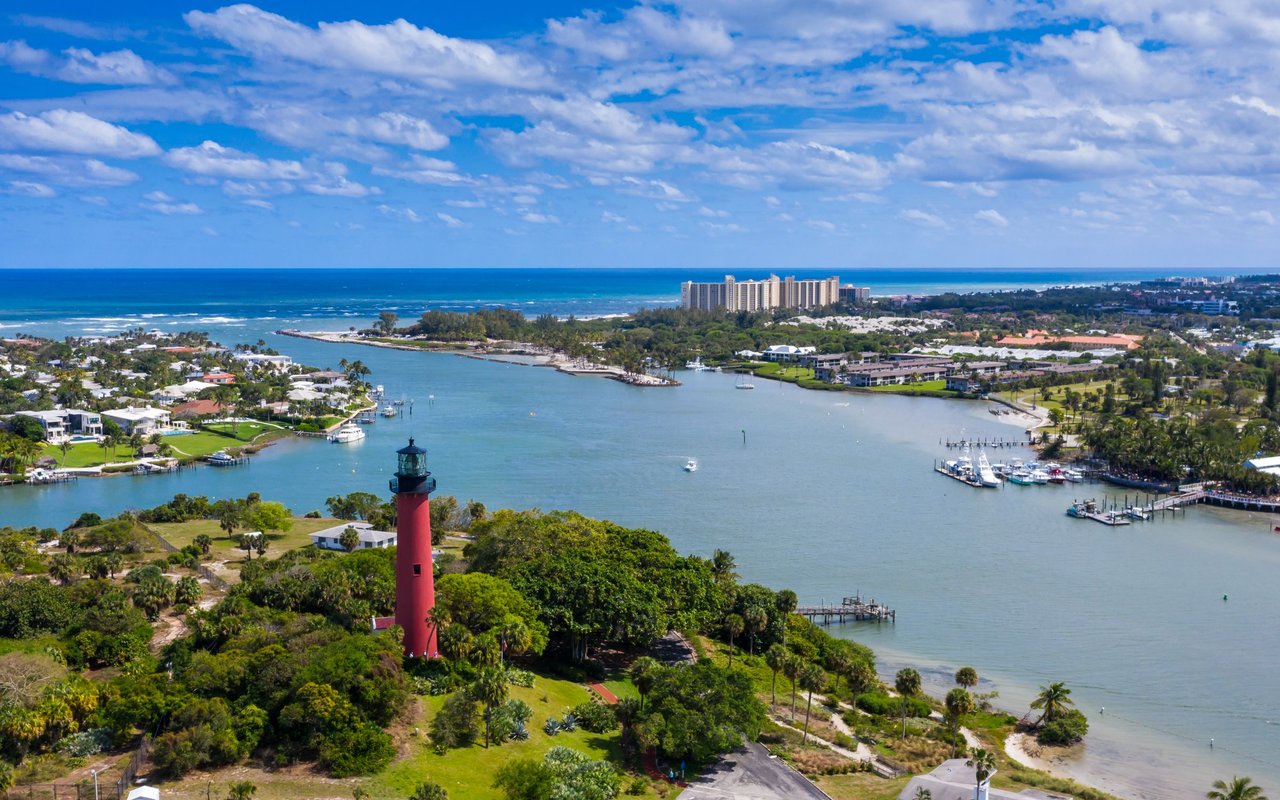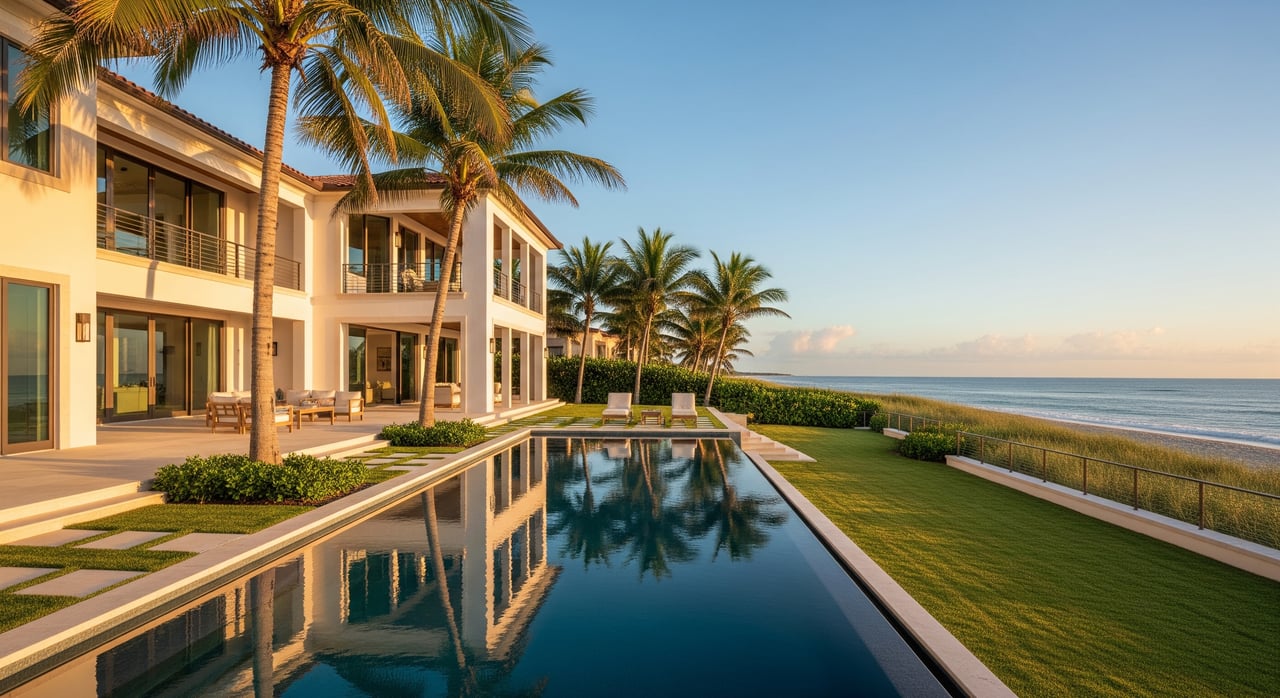
You are choosing between two exceptional coastlines, not just two addresses. If you want the right oceanfront estate in Palm Beach County, you need clarity on tradeoffs that go far beyond price. In the next few minutes, you will learn how privacy, lot utility, regulatory limits, risk, and total cost of ownership differ between Palm Beach and Manalapan so you can move forward with confidence. Let’s dive in.
Palm Beach vs Manalapan overview
Palm Beach is a larger, well‑established town on the barrier island with a mix of historic estates, newer mansions, luxury condos, and iconic commercial corridors like Worth Avenue. You get ready access to dining, private clubs, cultural spots, and guest services. Estate privacy varies by street and proximity to public areas.
Manalapan is a very small village south of central Palm Beach with extremely limited inventory. Lots tend to be larger and deeper with fewer public access points. The vibe is quiet and private, which appeals if you want a compound lifestyle with minimal passersby.
Choose Palm Beach if you value elite address recognition and an active social and service scene alongside privacy. Choose Manalapan if absolute privacy, larger parcels, and a retreat setting sit at the top of your list.
Pricing and lot fundamentals
What drives value
For both towns, value starts with the land. Key price drivers include:
- Ocean frontage measured in linear feet.
- Buildable area above required base flood elevation and freeboard.
- Lot depth and usable yard between the residence and dune.
- Age and condition of the main house and any guest or staff areas.
- Presence of docks or Intracoastal rights where applicable.
- Historical cachet or landmark status, plus the level of turnkey finishes.
Palm Beach offers a broad range of luxury price points that include ultra‑prime estates and condos. Manalapan often commands top per‑front‑foot values for single‑family oceanfront because the supply of large, private parcels is so limited.
Lot size and shape
Manalapan parcels are typically larger and deeper with fewer narrow, subdivided lots. This allows more flexibility for setbacks, guest houses, pools, service drives, and event lawns. Palm Beach is more varied. You will find some grand historic parcels as well as streets with narrower frontages or lots shaped by nearby roads and public corridors.
Buildable area and design constraints
Coastal building codes, dune protection, setbacks, and flood rules determine your buildable envelope. Required finished‑floor elevations influence design and construction costs. In Palm Beach, historic preservation overlays and design review can limit exterior changes on designated properties. In both towns, align early with your architect, builder, and coastal engineer to confirm what is possible.
Privacy, security, and lifestyle
Privacy and neighborhood density
Manalapan’s small scale and limited through‑traffic provide a quieter beachfront experience. Properties often feature long private driveways and unobstructed views. In Palm Beach, privacy varies by block. Estate rows offer seclusion, while areas near hotels, public beaches, and shopping attract more visitors, which is ideal if you want energy and convenience.
Security planning
Both locations support gated entries, perimeter walls, and private security. Manalapan’s village scale makes perimeter control straightforward. In Palm Beach, the plan is more property‑specific because of proximity to commercial corridors and pedestrian activity. Either way, a tailored approach delivers the right balance of discretion and response speed.
Amenities and social life
Palm Beach puts you close to high‑end retail, restaurants, private clubs, and cultural institutions. Logistics for guest arrivals, valet, and vendor support are often simpler due to established infrastructure. Manalapan prioritizes calm and space. You can still access services nearby, but your daily rhythm feels more retreat‑oriented and less public.
Boating and dock access
Not all oceanfront parcels include Intracoastal frontage or dock rights. In Palm Beach, you have established marina facilities and club options. Manalapan buyers often rely on private docks where allowed or use nearby marinas in adjacent towns. Confirm depth, slip availability, and travel time from day one if boating is central to your lifestyle.
Risk, insurance, and carrying costs
Storm and sea‑level exposure
Both towns sit on a barrier island and face hurricane winds, storm surge, and long‑term sea‑level rise. Micro‑site attributes matter as much as the town name. Elevation, dune health, shoreline configuration, and proximity to channels all affect risk. Use property‑specific elevation certificates and modeled storm surge scenarios to understand exposure and mitigation.
Insurance landscape
Florida’s property insurance market evolves frequently. Availability, limits, and deductibles for windstorm and flood coverage vary based on elevation, mitigation features, and underwriting. Elevated homes that meet or exceed flood standards can reduce premiums, but they may cost more to build or retrofit. Plan for specialty coverage on high values and review options for flood through NFIP and private carriers.
Permitting and preservation
Shoreline permits, dune restoration, and beach nourishment projects can affect beach width, access, and what you can build or maintain. Seawalls, dune work, and shoreline structures face strict review to protect habitat and public access. In parts of Palm Beach, historic districts add design review that can extend timelines for exterior changes.
Taxes and services
Florida has no state income tax, which can be favorable if you pursue residency. Property tax millage, special assessments, and municipal services differ by town and by property. Confirm trash, police, beach cleaning, private road obligations, and HOA fees where applicable to understand your annual carrying costs.
Due‑diligence checklist
Use this checklist to streamline your first pass on any short list.
- Title and legal
- Confirm clean title, easements, riparian rights, and any HOA or covenant restrictions.
- Physical and site
- Obtain an elevation certificate. Inspect structure, windows, roof tie‑downs, generator, and mechanical elevations. Evaluate seawalls, dunes, drainage, and sand replenishment history.
- Environmental and regulatory
- Review coastal construction permits, shoreline alteration history, and any habitat considerations such as sea turtle nesting.
- Insurance and resiliency
- Ask for current policies, claims history, and quotes for windstorm, flood, and reconstruction coverage. Identify mitigation credits and contingencies for possible nonrenewal.
- Operational and lifestyle
- Clarify access logistics, service drives, staff quarters permitted by zoning, event parking, noise and curfew rules, and whether public gatherings are allowed on private beachfront.
- Financial and exit
- Pull comparables by oceanfront linear foot, buildable area above flood elevation, and finished square foot. Model acquisition plus retrofit costs and annual carrying costs at 1, 3, 5, and 10 years. Coordinate with advisors on domicile and ownership structures.
Decision framework for your family
Clarify priorities. Rank what matters most: privacy, immediate access to clubs and retail, parcel size and expansion potential, staff housing, event capacity, risk tolerance, and liquidity horizon.
Map priorities to place. If privacy and lot scale are top ranked, Manalapan often scores higher. If amenity access and a lively social scene matter along with an elite address, Palm Beach often fits better.
Quantify tradeoffs. Compare price per oceanfront linear foot, buildable area above flood standards, expected reconstruction cost per square foot, and projected insurance differentials. Use apples‑to‑apples new or similarly aged comps.
Pressure test the short list. Run storm surge and sea‑level scenarios, obtain elevation certificates, and secure firm insurance and construction estimates before final decisions.
How we advise at SERHANT. Palm Beaches
You get a discreet, data‑smart process designed for UHNW families:
- Discovery and objectives
- We document hard constraints and soft preferences, including privacy targets, social life, staff needs, event plans, and time horizon.
- Comps and parcel profiling
- We pull oceanfront comparables focused on linear frontage, acreage, age, and redevelopment potential. We right‑size values for condition and turnkey status.
- Expert due diligence
- We coordinate with coastal engineers, building officials, and insurers early to surface permit and insurance realities before you commit.
- Total cost modeling
- We model acquisition price, closing costs, compliance upgrades to meet flood standards, and annual carrying costs under multiple hold periods.
- Presentation and execution
- We present a clear tradeoff matrix and recommended paths. We also provide discreet search and confidentiality structures when required.
Final take
Palm Beach versus Manalapan is not an absolute choice. It is a balance between privacy and lot scale on one side and access to amenities and civic life on the other. The right answer often comes from micro‑site attributes like elevation, setbacks, and buildable envelope more than a town name. When you evaluate both markets with the same disciplined lens, the best fit becomes obvious.
Ready to compare specific parcels and see the tradeoffs in real time? Connect with Christian Prakas for a private, data‑driven consultation tailored to your goals.
FAQs
Which location is more private?
- Manalapan generally offers greater privacy and lower density, while Palm Beach includes private estate pockets along with busier commercial and visitor areas.
Which is better for hosting large events?
- Both can host events subject to municipal rules and site layout, but Palm Beach’s vendor base, hotels, and services often make logistics easier.
Are insurance costs higher in one town?
- Premiums depend on parcel elevation, construction resilience, and insurer underwriting more than town borders. Better mitigation usually lowers costs.
How do I compare value across the two?
- Use multi‑factor comps: price per oceanfront linear foot, buildable area above flood elevation, age and condition, and cost to elevate or retrofit.
Will sea‑level rise force abandonment soon?
- Not imminently. Model long‑term exposure, mitigation costs, and municipal adaptation plans, then align your purchase with your risk tolerance and hold period.